

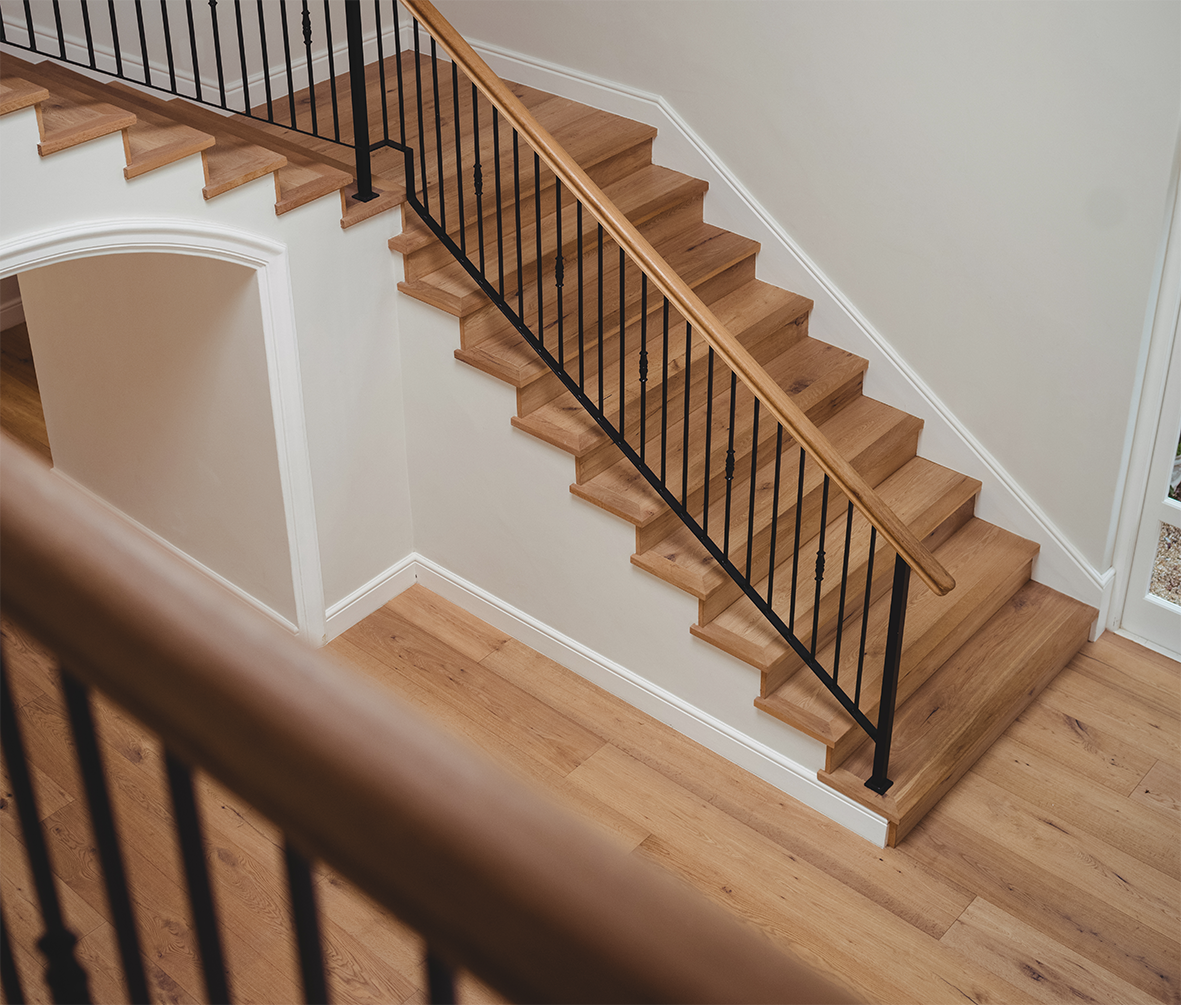
Stair Treads and Risers: How to Choose the Right Wood Species for Your Staircase
When you’re planning a staircase, it’s easy to get caught up in the big picture. You think about the design, the layout, and how it will look in your home. But one of the most important decisions often gets overlooked until later: the wood itself.
The type of wood you pick for your stair treads and risers will truly shape everything. It impacts how your staircase looks, how it stands up to daily life, and how well it fits with your home’s overall style.
For builders, contractors, and homeowners, this is where practicality meets beauty. Make the right choice, and your stairs will handle daily foot traffic, look great with your interior, and add lasting value to your property.
This guide will walk you through selecting the best wood for stair treads and risers. We’ll show you what to look for in different wood species and how to match your choice to your project’s goals.
If you are in the early stages of planning, it helps to review available wood stair treads and stair risers before making a final decision.
Understanding Stair Treads and Risers
Before we dive into different types of wood, let’s quickly define these key staircase parts.
Stair Tread: This is the flat, horizontal surface you actually step on. Because it takes all the impact, it needs to be very durable and stable.
Stair Riser: These are the vertical boards between each tread. They’re more about looks than structure, but they play a huge role in the staircase’s overall appearance.
Since stair treads get constant foot traffic, they absolutely need harder, more resilient wood. Stair risers, on the other hand, give you a bit more freedom when it comes to wood species and finishes.
Why Your Wood Choice Matters for Staircases
Not all wood performs the same, and research from the US Forest Service wood handbook on wood properties highlights how density and hardness impact durability and long-term performance.
The species you choose has a big impact on several factors:
- Durability: How well it resists dents, wear, and everyday use.
- Stability: How well the wood maintains its shape over time, resisting warping or movement.
- Appearance: Its unique grain pattern, natural color variations, and overall aesthetic.
- Finish Compatibility: How well the wood takes stains or clear protective coats.
For stairs, which are high-traffic areas, durability and stability should always be your top priorities. The appearance should complement your design, but never at the expense of performance.
Best Wood Species for Stair Treads
Choosing the right wood species early helps ensure your stair tread and riser materials perform well over time.
Oak
Oak is one of the most popular choices for wood stair treads, and there’s a good reason for its reputation.
- It’s strong and incredibly durable.
- It has a distinct grain pattern that adds a lot of character.
- It’s widely available and usually cost-effective.
Red oak tends to have warmer, reddish tones, while white oak offers a more neutral, modern look and is slightly more durable.
Best for: Traditional homes, staircases that see a lot of foot traffic, and projects where long-term performance is key.
Maple
Maple is known for its smooth, subtle grain and very clean appearance.
- It’s very hard and highly resistant to wear.
- Its light color works beautifully in modern interiors.
- It has a minimal grain, creating a refined look.
Maple doesn’t absorb stain as evenly as oak, so it’s often chosen with clear or very light finishes to highlight its natural beauty.
Best for: Contemporary interiors and stair designs that demand a clean, minimalist aesthetic.
Hickory
Hickory is one of the hardest domestic wood species you can find.
- It’s exceptionally durable and impact-resistant.
- It features a high-contrast grain that creates a bold, striking look.
- It’s ideal for environments with very heavy use.
Hickory’s natural variation means every staircase made from it will be truly unique.
Best for: Rustic homes, cabins, and any high-traffic area where extreme durability is essential.
Pine
Pine offers a softer, more natural, and often warmer look.
- It’s generally more affordable than many hardwoods.
- It’s easy to work with and install.
- It develops a beautiful character and patina over time.
While softer than oak or maple, pine can still perform very well when properly finished and maintained.
Best for: Rustic interiors, cabins, and projects where budget is a key consideration.
Choosing Wood for Stair Risers
Stair risers offer much more design flexibility compared to treads.
Many builders and homeowners choose to:
- Match the tread species for a completely uniform look.
- Use a less expensive, secondary wood species to help manage costs.
- Paint the risers for a sharp contrast and visual interest.
Because risers don’t endure the same wear and tear as treads, your choice here can be driven more by design preferences.
Tip: Painted risers paired with natural wood stair treads are a very popular option that perfectly balances durability with stylish design.
Key Factors to Consider When Choosing Wood Stair Treads
Traffic and Use
If your staircase is in a main living area and sees constant use, always prioritize harder wood species like oak, maple, or hickory. For areas with lighter traffic, softer woods might be acceptable.
Interior Style
Your wood choice should seamlessly blend with the rest of your home’s aesthetic.
- Rustic or cabin style: Consider pine or hickory.
- Traditional homes: Oak is a classic choice.
- Modern interiors: Maple or white oak often work best.
Finish and Color
Some wood species take stain much better than others. If you have a specific color or finish in mind, choose a species that will consistently achieve that desired look.
Budget
The cost of materials can vary significantly from one wood species to another. Mixing species between treads and risers can be an excellent strategy to balance performance with your budget.
Solid vs. Engineered Stair Treads
When selecting your wood stair treads, you might also consider the construction type.
- Solid wood treads: These are traditional, incredibly durable, and can be refinished multiple times over their lifetime.
- Engineered options: These can offer more stability in environments with changing humidity and temperature but may have limitations on how many times they can be refinished.
For most residential staircases, solid wood remains the preferred choice for its long-term performance and classic appeal.
How to Match Stair Treads with Your Flooring
Consistency is crucial when you want your staircase to flow seamlessly into the rest of your home.
- Match the wood species for a perfectly cohesive look.
- Use complementary tones for a subtle contrast that adds visual interest.
- Consider grain patterns to maintain a harmonious visual flow throughout your space.
A well-matched staircase feels like a natural extension of your home, not a separate or isolated element.
Finding Quality Wood Stair Parts
The quality of the material is just as important as the wood species itself. Proper milling, thorough drying, and accurate grading all directly impact how well your staircase will perform and hold up over many years.
When you’re sourcing materials, make sure you work with a supplier who truly understands structural wood components and interior applications.
For a full range of stair treads, stair risers, and wood stair parts, explore available options here
Bringing It All Together
Choosing the right wood for your stair treads and risers goes far beyond just appearance. It’s about selecting a material that will perform reliably under daily use, perfectly complement your living space, and stand strong for years to come.
Oak, maple, hickory, and pine each bring distinct advantages to the table. The very best choice for you will depend on your home’s traffic levels, your design goals, and your budget.
When you take the time to match the perfect wood species to your project, your staircase becomes much more than just a functional way to get from one floor to another. It transforms into a defining and beautiful feature of your home.
If you’re planning your next build or an upgrade, remember to start with the materials. The right wood truly makes all the difference. Reach out to our team for expert recommendations tailored to your build