

Eastern White Pine vs. Southern Yellow Pine: A Builder’s Comparison
When you are planning a new construction project, one of the biggest decisions you will make is choosing the right wood species. This choice impacts everything from the project’s appearance and structural integrity to its longevity, ease of use, and overall cost.
Two of the most popular and trusted options in residential and timber construction are Eastern White Pine and Southern Yellow Pine lumber. Both are widely available and relied upon by builders, but they each have unique characteristics that make them suitable for different applications.
If you are currently weighing your options, this guide will walk you through a real-world comparison of these two prominent wood species. Our goal is to equip you with the knowledge to confidently select the ideal material for your next build.
Understanding the Basics of Each Species
Before we dive into performance comparisons, let’s get acquainted with what makes each of these woods distinct.
Eastern White Pine
Eastern White Pine is a lightweight softwood with a rich history in North American construction, spanning generations. It is celebrated for its straight grain, smooth texture, and a beautiful light color palette that ranges from soft pale yellow to gentle brown hues.
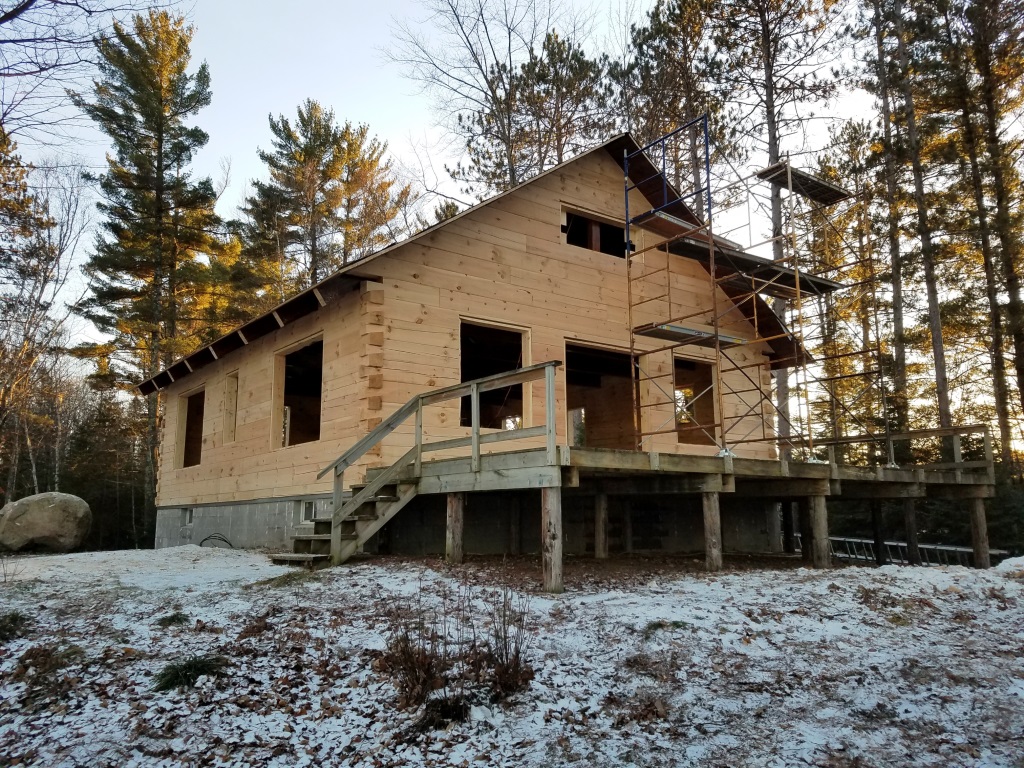
Builders often choose Eastern White Pine for projects where aesthetics and workability are paramount. Think interior finishes, charming paneling, and classic log siding.
You will frequently find Eastern White Pine in:
- Log siding and exterior cabin finishes
- Interior tongue and groove applications
- Trim and fine millwork
- Decorative beams that add character
Southern Yellow Pine Lumber
Southern Yellow Pine lumber refers to a group of dense, high-strength pine species primarily grown throughout the southeastern United States. It stands out as one of the strongest softwoods available, making it a go-to choice for structural applications.
Its grain tends to be more pronounced and robust, and its color spectrum spans from a warm golden yellow to deeper, richer amber tones.
It is commonly specified for:
- Robust structural framing
- Dependable floor joists and roof systems
- Sturdy posts and beams
- Durable decking and various outdoor structures
If your project demands load-bearing components, Southern Yellow Pine is often the material builders reach for first due to its inherent strength.
Strength and Structural Performance
When it comes to building, strength is often a non-negotiable factor. This is where Eastern White Pine and Southern Yellow Pine diverge significantly.
Southern Yellow Pine lumber is notably denser and considerably stronger than Eastern White Pine. Its superior load-bearing capacity makes it the prime candidate for structural applications where durability and unwavering performance are absolutely critical.
Eastern White Pine, while still a reliable and beautiful building material, is softer and lighter. It finds its best use in non-structural applications or in areas where a lighter weight and easier installation take precedence over sheer brute strength.
For example:
- Choose Southern Yellow Pine for foundational framing, robust beams, and dependable joists.
- Opt for Eastern White Pine for attractive siding, interior paneling, and elegant decorative elements.
If your construction requires engineered strength to support significant loads, Southern Yellow Pine is typically the superior choice. However, for applications where visual appeal is the main focus, Eastern White Pine often takes the lead.
Workability and Installation
From a builder’s perspective, how easily wood can be worked can significantly impact efficiency and labor on the job site.
Eastern White Pine is remarkably easy to work with. It cuts cleanly and precisely, accepts nails with minimal effort, and is far less prone to splitting. These characteristics make it a favorite for intricate detail work, custom fitting, and projects where speed and efficiency are key.
Southern Yellow Pine lumber, being much denser, can be more demanding on tools and may sometimes require pre-drilling to prevent splitting. However, this very density is what contributes to its exceptional strength and lasting durability.
In practical terms:
- Eastern White Pine can help speed up both the installation and the finishing stages of a project.
- Southern Yellow Pine requires more effort during construction but delivers inherently stronger results.
Builders often make their choice by carefully balancing the need for labor efficiency with specific structural requirements.
Appearance and Grain
The visual appeal of wood is a crucial consideration, especially for elements that will remain exposed in the finished project.
Eastern White Pine presents a softer, more uniform appearance with subtle and understated grain patterns. It readily accepts stains and finishes evenly, making it a popular choice for interior spaces and visible surfaces where a refined look is desired.
Southern Yellow Pine lumber showcases a more pronounced and dramatic grain with greater color variation. Many builders and homeowners appreciate this distinctive look for its ability to create a more rustic or traditional aesthetic.
If your aim is a clean, understated, and refined aesthetic, Eastern White Pine is usually the better fit. If you prefer a bolder, more natural wood look with character, Southern Yellow Pine might be the perfect direction for your project.
Moisture, Movement, and Stability
Understanding how wood responds to moisture and changes in the environment is something every skilled builder must consider.
Eastern White Pine is well-regarded for its dimensional stability. It tends to shrink and expand less compared to denser wood species, which significantly helps in preventing common issues like warping and cracking over time.
Southern Yellow Pine lumber, due to its inherent density, can be more susceptible to movement if it is not properly dried and installed. However, when it is kiln-dried and handled correctly, it performs exceptionally well even in challenging environments.
For applications such as exterior siding or interior paneling, where consistent appearance and minimal movement are vital, the stability of Eastern White Pine often makes it the preferred option.
Cost Considerations
Pricing for lumber can fluctuate based on region, current market conditions, and availability, but there are some general trends worth noting.
Eastern White Pine is often more cost-effective for finish applications and non-structural components. Its ease of use can also translate into reduced labor costs, which is an important factor when you are budgeting for the overall project.
Southern Yellow Pine lumber is typically priced very competitively for its use in structural applications. Because of its superior strength, using Southern Yellow Pine can sometimes reduce the need for larger or additional framing members, which can help balance out material costs in the long run.
Choosing the right wood species is not simply about the price per board foot. It is about maximizing the total value and performance for your entire project.
How It Compares to Other Structural Woods
Builders frequently compare these options to other popular materials, especially when making critical decisions about framing.
A common question that arises is how these species measure up in broader comparisons, such as the classic debate of Douglas Fir vs. Pine.
Douglas Fir is another incredibly strong softwood that competes closely with Southern Yellow Pine in many structural applications. It offers excellent strength and stiffness, making it a reliable choice. However, its availability and cost can vary significantly depending on your specific geographic location.
In many regions across the country, Southern Yellow Pine lumber is more readily available, which solidifies its position as a practical and cost-effective alternative for structural builds.
Choosing the Right Wood for Your Project
There is truly no single “best” answer when it comes to wood selection. The optimal choice always depends on the specific demands of how and where the material will be used in your project.
Choose Eastern White Pine if your project involves:
- Classic log siding or exterior cabin finishes
- Beautiful interior finishes and paneling
- Elegant decorative beams or detailed trim work
- Projects where ease of installation and speed are a top priority.
You can explore options like our premium log siding and stunning interior wood products directly through Reliance Timber’s product pages to see how Eastern White Pine is beautifully utilized in real construction.
Choose Southern Yellow Pine lumber if your project requires:
- Robust structural framing for walls and roofs
- Heavy-duty, load-bearing beams or floor joists
- Durable outdoor structures like decks and pergolas
- Any application demanding high-strength performance
For critical structural components, it is always wise to review our available structural timber options to ensure your chosen materials meet all necessary engineering requirements.
If you are embarking on building a full log home or cabin, seamlessly connecting your material choices with the right system is paramount. Pairing your wood selection with properly designed logs and corners from Log Cabin Supply can ensure a consistent, reliable, and beautiful build.
Final Thoughts
Both Eastern White Pine and Southern Yellow Pine lumber hold an important and respected place in modern construction. The key to a successful build lies in thoroughly understanding the unique performance characteristics of each and making your selection based on the specific needs of your project.
Eastern White Pine offers unmatched beauty, dependable stability, and exceptional ease of use. Southern Yellow Pine, on the other hand, delivers incredible strength, lasting durability, and unwavering structural reliability.
In fact, many of the most successful and enduring builds cleverly utilize a combination of both species, expertly leveraging each wood where it performs its absolute best.
If you are planning to build and want to make sure you are choosing the right species for each part of your project, our team at Reliance Timber is here to help. We work closely with builders, contractors, and homeowners to match materials to real-world applications.
Get in touch with us today to discuss your project and find the right wood for your build.